
断头谷
Chinese researchers develop new lithium battery withstanding - 40 C with both long endurance and explosive strength_我的网站

一 |
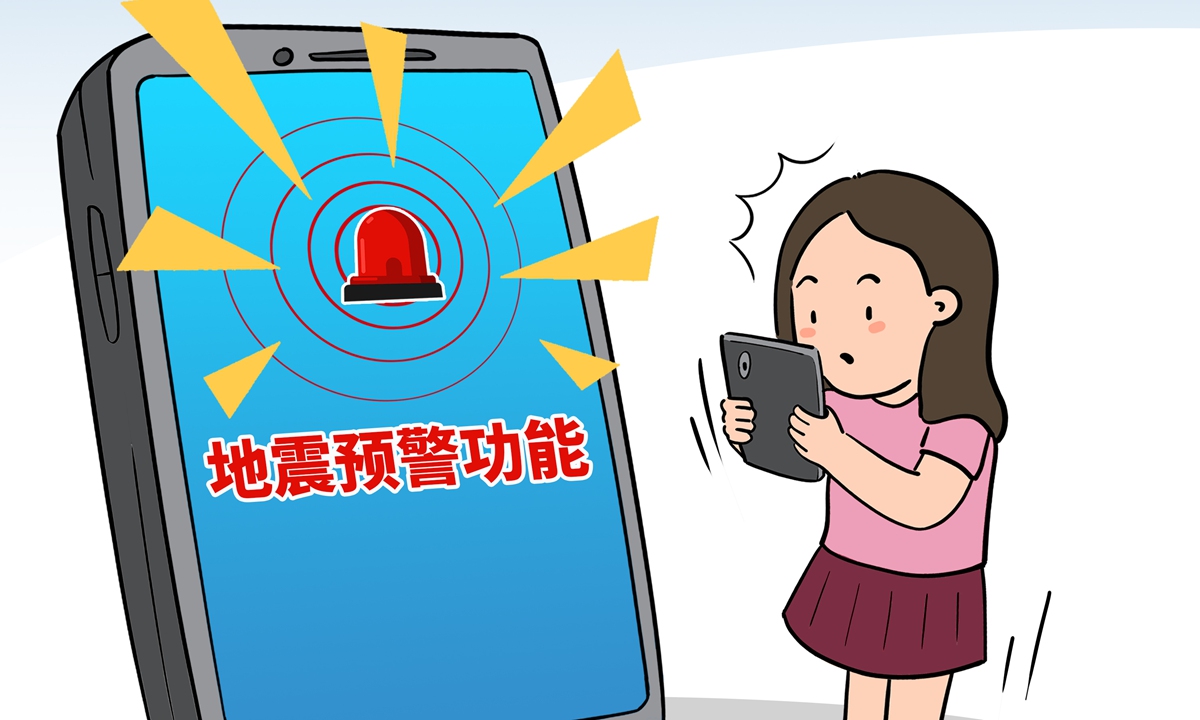
After the Institute of Care-life, a Chengdu-based disaster reduction laboratory, mistakenly issued a 7.7-magnitude alert for a 4.7-magnitude earthquake, the Sichuan earthquake agency on Monday accused the institute of using the name of the official earthquake early warning network without authorization, saying its authorization to use the network had already been terminated last month.
A 4.7-magnitude earthquake struck Yibin at 8:26 am on Monday, according to the China Earthquake Networks Center. However, the Institute of Care-life issued a 7.7-magnitude earthquake alert just five seconds after the quake struck, causing panic among many users.
The institute used the name of the "China Earthquake Early Warning Network" (an early warning system under the China Earthquake Administration) without authorization to issue a 7.7-magnitude earthquake alert to the public through Honor and Vivo smartphones, as well as Xiaotiancai smartwatches, drawing widespread public attention, said the Sichuan earthquake agency in a statement.
The agency said it had terminated the institute's third-party authorization to access emergency earthquake information services from the China Earthquake Early Warning Network on July 22, 2026.
In response to the false alarm, the Institute of Care-life said that its earthquake early-warning network initially estimated the quake at magnitude 7.7 five seconds after it occurred, before revising the estimate to 6.4 at the sixth second, 3.7 at the seventh second, 4.1 at the eighth second and 3.9 at the 16th second. The estimated magnitude automatically converged to 3.9 by the 17th second after the earthquake, the institute said.
Addressing the significant discrepancy, the Institute of Care-life said that deviations in estimates of an earthquake's magnitude and epicenter are inevitable to some extent, as early-warning information is generated automatically shortly after a quake begins, before the seismic event has ended.
The Institute of Care-life apologized for the inaccurate alert and said it would investigate the cause as soon as possible while improving its technology and services.
Global Times
。
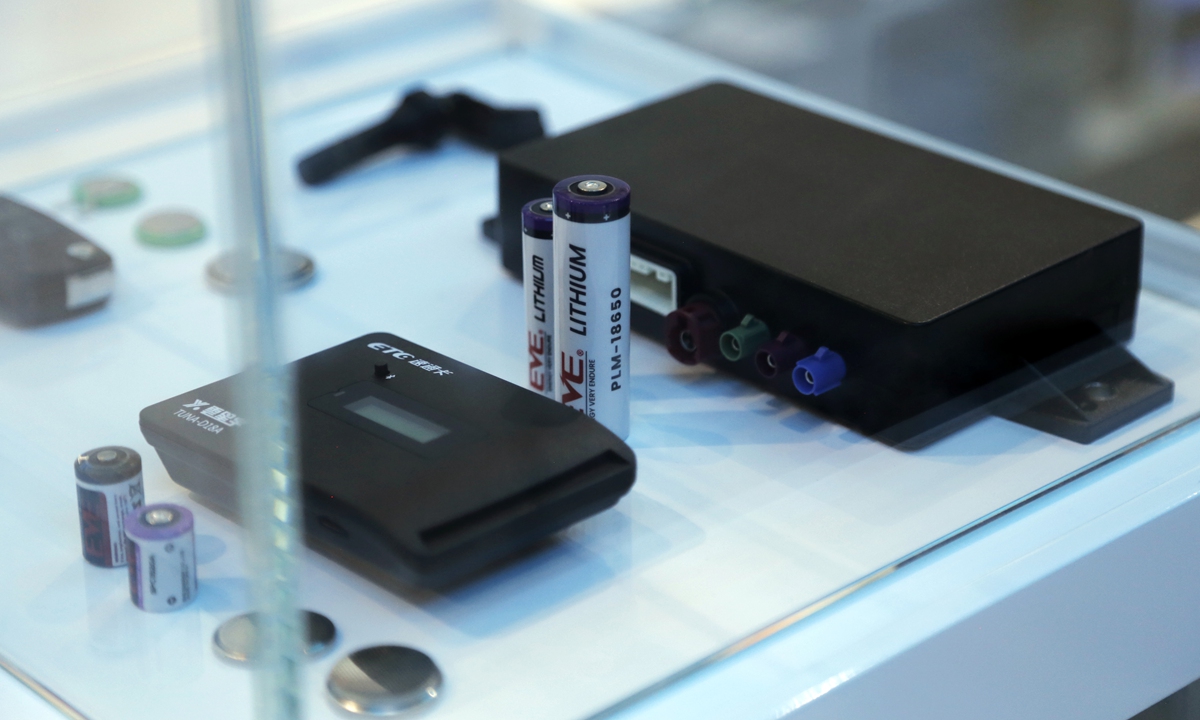
A research team led by Chen Zhongwei at the Dalian Institute of Chemical Physics under the Chinese Academy of Sciences developed a 25-ampere-hour pouch-type lithium-metal primary battery. Tests conducted by the safety laboratory of the China Electronics Standardization Institute showed that the battery achieved an energy density of more than 750 Watt-hour per kilogram at a low discharge rate, according to the report.
Meanwhile its discharge rate can be increased by up to 100 times, enabling short bursts of high-current discharge at 10C. The "C" stands for C-rate, which is the charge and discharge rates of a battery. According to sector website Battery University, the capacity of a battery is commonly rated at 1C, meaning that a fully charged battery rated at 1Ah should provide 1A for one hour. The same battery discharging at 0.5C should provide 500mA for two hours, and at 2C it delivers 2A for 30 minutes.
The new battery puts China among the world's leading players in high-power primary battery technology.
Primary batteries offer high specific energy, long storage times and instant readiness, allowing them to be used immediately even after long storage.
Primaries play an important role, especially when charging is impractical or impossible, such as in military combat, rescue missions and forest-fire services, the article said.
Traditional lithium primary batteries can store large amounts of energy for long periods, but their ability to rapidly release that energy can be limited. The new battery is designed to combine high energy density with high power output, allowing it to both operate for extended periods and provide large amounts of power when needed.
The battery can deliver short bursts of high-current discharge at up to 10C and sustain discharge at 4C. At room temperature, its specific power reaches 4,487 Watts per kilogram, according to Science and Technology Daily.
The battery also maintains strong performance under extremely cold conditions. At -40 C, the battery retains an energy density of 447 Watt-hour per kilogram at a 1C discharge rate. Its annual self-discharge rate is below 1 percent, meaning that it loses relatively little stored energy during long periods of standby.
Such characteristics could make the battery suitable for equipment that needs both long-term energy storage and sudden high-power output, including drones, robots, spacecraft and sensors deployed in remote areas.
Chen said the team achieved a breakthrough in cathode materials by developing a high-entropy oxide material and has established a pilot production line with an annual capacity of 10 tons, linking material development with battery-cell production.
The battery has passed third-party testing and is now undergoing further validation for applications including drones, robots, spaceflight simulators and field sensor nodes, according to Chen.
Global Times
。
Current article:http://vldui.jiubengtaibingpengou.pics/list_k47o/k4xp.html
Published on:15:46:13
最新文章
- 礼赞丰收 地道人 道地药
- रूस-यूक्रेन की सेनाओं में डोनेस्क समेत कई जगह हो रही भीषण लड़ाई, ट्रंप बोले- जेलेंस्की भी मासूम नहीं
- 沪渝蓉高铁上海特大桥跨S7沪崇高速公路合龙
- 随着威少退役,联盟35岁以上球员:41岁一位,40岁一位,36岁四位!
- Counterpoint:苹果 iPhone 17 成为 2026 年 Q2 全球最畅销智能手机
- Traditional Values & Military Glory: Things to Know as Russia Celebrates National Flag Day
- 看完日本和韩国这场热身赛,河村勇辉的表现,戳中了中国男篮最痛一处伤疤
- 差距非常悬殊!半场比拼火箭有7个前场篮板 勇士0个
- 3999起!华为Mate50系列如约而至,但只推荐三款_Pro_方面
- Politics-driven Graham-named Russia sanctions bill exposes US political coercion in global energy supply chains: expert
标签云
热门文章
- 俄罗斯外长拉夫罗夫将率代表团前往纽约参加联合国大会
- 欣立家居用品
- French rider Valentin Debise’s Chongqing 'Landing Visa' ride puts mountain city in global spotlight
- 趁男友不在跟暧昧者要巧克力!德芙文案翻车:直播间销售额跌至1000元
- 生成式官网Hantu AI-Gen CMS为企业应用方向重构
- 市场监管总局发布第二批招标投标领域系统整治典型案例
- 数智赋能新业态 一组数据看电商经济活力,数智赋能新业态 一组数据看电商经济活力
- 划水!亚历山大今天仅得15分 他上次得分低于20还是去年10月
- CK Hutchison seeks $1.5 billion from Panama in arbitration
- 美股开盘:三大指数集体高开,存储芯片股普涨,SK海力士、西部数据、闪迪涨超2%